Curious why Lake Waccamaw looks and feels different from other lakes in North Carolina? If you have spent time on its broad, shallow shoreline or paddled its quiet edges, you have already experienced a Carolina bay lake. If you are considering a home nearby, understanding this lake type can help you choose the right property with confidence. In this guide, you will learn what a Carolina bay lake is, how Lake Waccamaw works, and what to check before you buy. Let’s dive in.
Carolina bay lakes, in plain terms
Carolina bays are shallow, oval to elliptical depressions found across the Atlantic Coastal Plain. Many hold wetlands, and some, like Lake Waccamaw, contain open water year-round. When a bay holds open water, people often call it a Carolina bay lake.
These bays typically have a distinctive shape with their long axis oriented northwest to southeast. You often see a higher sandy rim around the edge and a lower interior that collects organic-rich soils. Unlike deep mountain lakes, bay lakes tend to be shallow with broad near-shore zones.
You find Carolina bays from the Mid-Atlantic through the Southeast, with a strong concentration in southeastern North Carolina. Think of them as a unique coastal-plain landform that creates its own kind of lake and wetland habitat.
How they formed: what science says
Scientists have studied Carolina bays for more than a century. There is no single, universally accepted origin. Instead, research points to a mix of processes that shaped different bays at different times.
Many geomorphologists favor a combination of wind and water working on wet coastal-plain sediments under past climate conditions. Other ideas include modification during colder periods, gradual enlargement by groundwater, or older depressions reworked over time. Impact theories appear in popular conversation, but they are not widely accepted as a one-size-fits-all explanation.
For you as a buyer, the key takeaway is simple. These are natural landscape features that formed over thousands to tens of thousands of years, and they continue to be studied today.
Hydrology and soils you can expect
Carolina bay lakes often have shallow basins with wide littoral zones. That means lots of sunlight reaches the bottom nearshore, which supports aquatic plants and fish habitat. Water levels commonly respond to seasonal rainfall and local groundwater.
Water chemistry varies from lake to lake. Some bays are clear and less acidic. Others are darker and more tannin-stained. Chemistry depends on local soils, vegetation, and groundwater connections.
Around many bays, you see sandy rims transitioning to peaty or organic soils toward the interior. That soil pattern affects what grows where and how water moves through the system.
Ecology and why it feels different
Bay lakes and their wetlands support plant and animal communities that are specialized for these conditions. You will see a gradient from aquatic plants to emergent marsh to forested wetlands, with drier pine and savanna-like areas on higher ground.
Because these habitats are uncommon, many bay lakes host species that are rare or have limited ranges. Wetlands also filter nutrients, support wildlife, and recharge groundwater. Common threats include invasive aquatic plants and nutrient enrichment, which can change habitat quality over time.
If you value nature access, a bay lake offers strong wildlife viewing and quiet paddling in shallow water. It is a different experience than a deep reservoir or steep mountain lake.
Lake Waccamaw: a living example
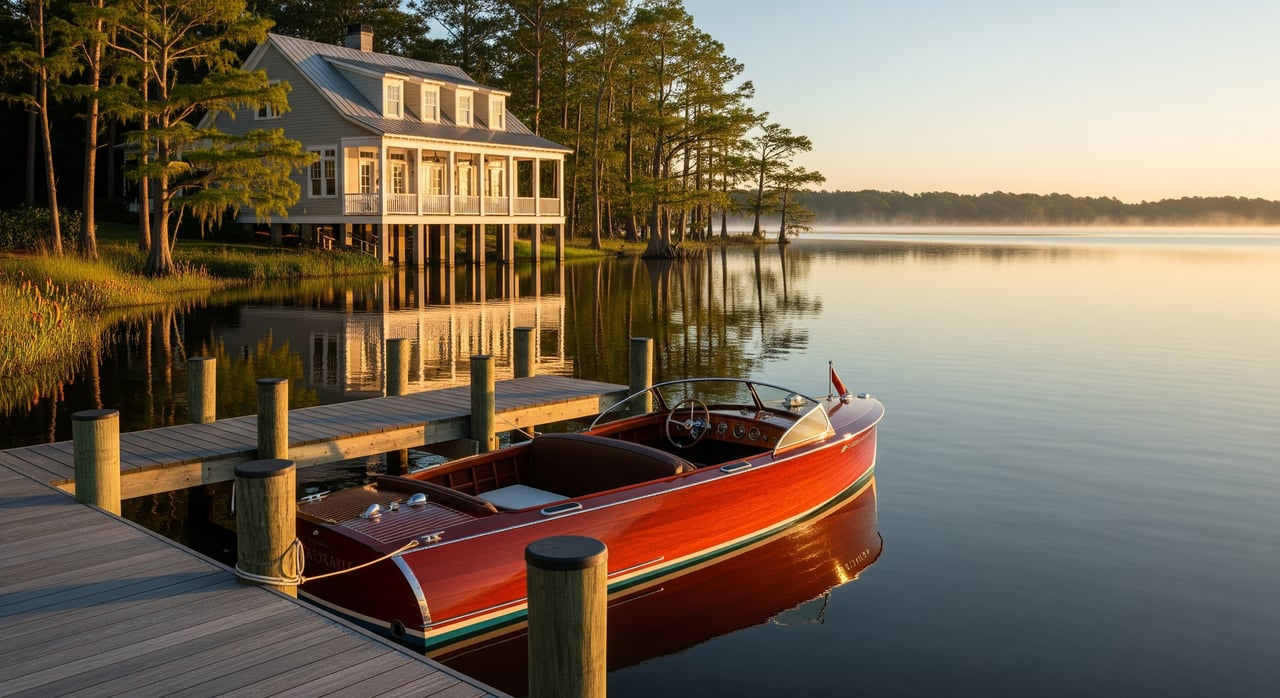
Lake Waccamaw in Columbus County, NC, is one of the best-known Carolina bay lakes. It anchors regional recreation and conservation and sits beside Lake Waccamaw State Park. Around the shore, you find both protected lands and private homes, which gives the lake a blend of public access and residential character.
Local agencies and partners monitor the lake’s water quality and manage recreation and access. Rules often focus on protecting shallow near-shore habitats and maintaining safe, enjoyable use for visitors and residents.
Recreation at a glance
- Boating, kayaking, and canoeing are common, especially across the wide, shallow flats.
- Fishing and wildlife viewing draw visitors through the seasons.
- Swimming is typically limited to designated areas for safety.
- Trails and boardwalks in nearby parkland offer hiking and birding.
These opportunities make the lake a lifestyle fit if you want easy access to the outdoors in a coastal-plain setting.
What this means for homeowners and buyers
A shallow, broad-littoral lake offers a distinctive shoreline experience. You get broad views, easy paddling, and excellent wildlife encounters. The trade-off is that seasonal water-level shifts can affect dock placement, boat access, and near-shore use.
You should also consider water quality. Bay lakes can be sensitive to nutrient inputs from lawns and nearby land uses. Ask for recent monitoring summaries and any history of aquatic plant issues, especially if you plan to add docks or irrigation.
Finally, expect that different parts of the lake may feel different through the year. Vegetation, clarity, and water depth can change seasonally and after major rain events.
Permits, rules, and infrastructure
- Septic systems: Coastal-plain soils often require careful septic planning. Some lots need enhanced systems or specific siting. Coordinate early with county environmental health.
- Docks and shoreline changes: In most cases, you need permits for docks, bulkheads, or shoreline stabilization. Agencies at the county, state, and federal levels may be involved depending on the work.
- Flood risk and insurance: Review FEMA flood maps and property elevations. Lenders and insurers may require flood insurance or specific building standards.
- Conservation and easements: Some shoreline or nearby parcels may sit within conservation lands or have recorded restrictions. Confirm any easements during due diligence.
Due diligence checklist for Lake Waccamaw buyers
- Request recent water-quality summaries from state environmental agencies.
- Confirm shoreline setbacks and dock permitting rules with county planning.
- Verify septic suitability and permits with Columbus County Environmental Health.
- Review FEMA flood maps and ask for an Elevation Certificate if needed.
- Check for HOA or lake association rules, fees, and use restrictions.
- Ask about invasive species advisories and any seasonal algal concerns.
- Map out public access points, boat ramps, and state park facilities for your lifestyle.
- Consider local wildlife guidance, including alligator awareness and protected species.
Lifestyle trade-offs to weigh
Pros
- Broad, shallow areas make for great paddling and quiet boating.
- Strong nature connection, wildlife viewing, and scenic wetlands.
- Nearby state park and public facilities support year-round recreation.
Cons
- Seasonal water-level changes can impact docks and boat access.
- Shallow lakes can see aquatic plant encroachment.
- Septic, flood, and permitting constraints can add cost or limit options.
Smart steps before you make an offer
If the lake lifestyle is calling, line up your due diligence early. Start with a clear view of flood risk, septic feasibility, and shoreline permitting. Then match neighborhood character and lake access to how you plan to use the property, whether that is weekend paddling or full-time living.
A locally informed plan will save you time, money, and stress at closing. If you want help comparing properties and coordinating the right inspections, talk with a brokerage that understands both lake ecology and local rules.
Ready to explore homes around Lake Waccamaw or nearby southeastern North Carolina communities? Reach out to Tatum Realty LLC for local guidance and a smooth path from first visit to closing.
FAQs
What is a Carolina bay lake, in simple terms?
- It is a shallow, oval-shaped coastal-plain depression that holds open water and is ringed by distinctive soils and wetland habitats.
How is Lake Waccamaw different from other NC lakes?
- It is a Carolina bay lake with broad, shallow near-shore zones, a sandy rim and wetland fringe, and a mix of protected parkland and residential shoreline.
Are Carolina bay lakes natural or manmade?
- They are natural features formed over thousands to tens of thousands of years, with origins still studied and likely shaped by multiple processes.
What should I check before buying waterfront on Lake Waccamaw?
- Review water quality history, septic suitability, flood maps, shoreline permitting, HOA or easements, and any invasive species or seasonal algal advisories.
Are Carolina bay lakes safe for swimming and boating?
- Generally yes in designated areas and seasons, but always follow park rules, be mindful of vegetation and depth, and check local guidance on current conditions.