Thinking about buying farmland in Bladen County but unsure if now is the right time? You are not alone. Many buyers are drawn to the area’s lower per‑acre prices and mix of farming, timber, and recreation potential, yet they also want clarity on soils, flood risk, and realistic returns. In this guide, you will get a clear picture of local pricing, common land uses, income paths, tax benefits, and the checks to complete before you make an offer. Let’s dive in.
Quick answer: Is it a smart buy?
For many buyers, yes, with the right parcel. Bladen County often offers lower per‑acre prices than many North Carolina cropland averages, which can be attractive if you want a hobby farm, timberland, or mixed recreation and legacy ownership.
If you are seeking steady row‑crop returns, be selective. Well‑drained, accessible acres with limited flood exposure exist, but they are not common and they command a premium. Recent public listing and sold examples show many timber, recreational, and former blueberry tracts in the rough band of $2,000–$5,000 per acre, with wide variation by soils, drainage, access, and utilities. See representative pricing from public land‑sale listings and sold examples for context, and always confirm with deed records and local comps.
- Price evidence: Bladen County listings and sold examples
What you can do with Bladen farmland
Row crops and field crops
Corn, soybeans and similar crops are grown where soils and drainage allow consistent fieldwork. Some coastal‑plain soils require improved drainage to perform well. Local support exists through the N.C. Cooperative Extension — Bladen County Center.
Blueberries and specialty crops
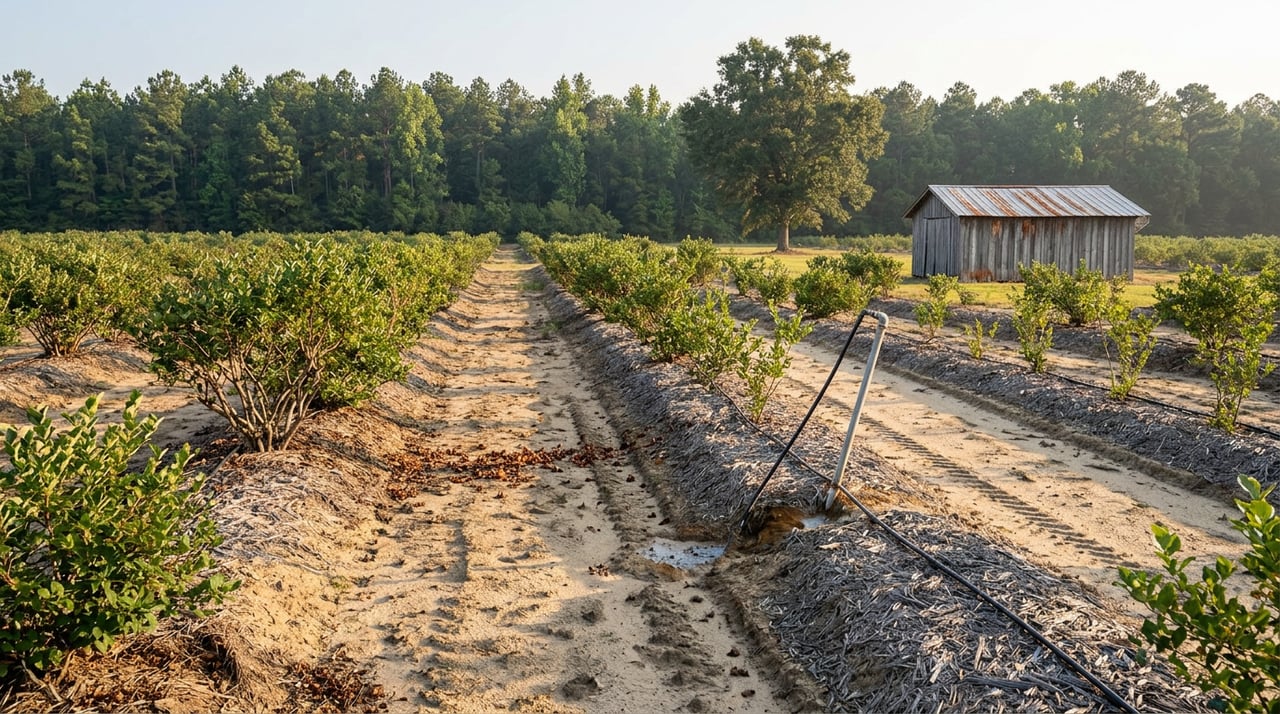
You will see former blueberry tracts in local sale records. These can be a fit if you match the soil and management needs of berries. Specialty crops and small vineyards also appear in the county.
Timber and pine plantations
Large parts of Bladen are in pine forestry. Managed stands can yield periodic thinning and harvest income. Foresters commonly use written management plans that also support tax classification.
Livestock and pasture
Smaller cattle or goats can work on suitable ground. Pasture performance varies with drainage and soil.
Recreation, hunting, and agritourism
Recreational value drives many sub‑200‑acre purchases. Some owners add seasonal income with pick‑your‑own, tastings, or small events. You can see statewide agritourism examples and support programs to spark ideas.
What land costs today
Publicly visible sales and listings point to a wide range. Many timber and recreational tracts, including parcels with blueberry history, cluster in the low thousands per acre, commonly $2,000–$5,000 per acre, while well‑drained, cleared acres with paved access can trade higher. Small building or cleared homesite tracts can total under $5,000–$10,000 in some cases, while large timber or hunting tracts often price in the low‑thousands per acre.
Use statewide cropland figures only as background. Recent farm real estate reporting shows statewide cropland averages that are often higher than local timber or recreational tracts in Bladen, largely because drainage, remoteness, or floodplain acreage keep prices down. See context from statewide cropland averages reported in the agricultural press. Your target parcel’s soils, access, and flood exposure will drive its real value.
Income and return expectations
Cash rent to local operators
If you plan to lease tillable acres, expect modest cash rent in this region. National and statewide figures summarized by the farm press put average cropland cash rents in the low hundreds of dollars per acre, but coastal‑plain rents vary by soil, drainage, and operator demand. Ask Extension or FSA for local comps before you pencil returns.
Timber revenue
For forestland, thinning and harvests produce periodic income based on species, stand age, and access to mills. A forester’s cruise is the only way to estimate volume and timing. For tax planning and eligibility, see NC Forest Service guidance on present‑use classification for forestland.
Conservation programs
Bladen County sees material Conservation Reserve Program activity. If your parcel has marginal or flood‑prone acres, enrolling eligible acres can add steady rental income. Review county‑level activity and payments via EWG’s county CRP data, then confirm current sign‑up and rates with your local FSA office.
Hunting and recreation leases
Hunting leases are common in eastern North Carolina and can offset annual holding costs, especially on timber or mixed habitat tracts. Typical rates vary by access, acreage, and game quality.
Agritourism add‑ons
If zoning and access allow, small‑scale agritourism can enhance returns on lower‑productivity acres. Think farm events, pick‑your‑own, or seasonal products that bring visitors.
What makes an acre productive
Soils and drainage
Bladen County includes the Bladen soil series and similar coastal‑plain soils. The official Bladen soil series description notes very deep soils that are often poorly to somewhat poorly drained. That affects cropping windows, yields, and the cost of making ground truly tillable. Build a soils report with NRCS tools and confirm in the field with an on‑site probe and drainage review.
Floodplains and wetlands
Low elevations and river systems mean some acreage sits in mapped floodplains or wetland complexes. This can impact insurance, lending, and crop reliability. Regional research highlights repeated flood exposure in the Robeson–Bladen–Columbus area. Review FEMA maps, local gauges, and regional flood analyses early in your search.
Taxes that can lower your hold cost
North Carolina’s Present‑Use Value program is a key benefit for qualifying agricultural, horticultural, and forestland. Instead of paying taxes on market value, qualifying land is assessed at its productive value, which can significantly reduce annual property taxes. Minimum acreage and income thresholds apply, and forestry tracts typically need a written management plan. Read the state’s Present‑Use Valuation Program Guide and speak with the Bladen County assessor about local timelines, applications, and any deferred‑tax implications if the land leaves the program.
How Bladen compares to other NC rural markets
Bladen can be relatively affordable compared to statewide cropland averages, especially for timber and recreation tracts or parcels with drainage constraints. If your goal is high cash‑rent potential or consistently productive row‑crop ground, you will likely either pay a premium within Bladen for well‑drained tillable acres or look to nearby submarkets with more consistent soils and drainage. Build your comparison using county Extension insights, CRP data, and closed sales, not just list prices.
Due‑diligence checklist before you write an offer
Use this as a starting point for any Bladen County parcel:
- Soils and drainage: Pull NRCS mapping, then confirm on site with a probe and drainage assessment. Quantify hydric soils and wetland indicators.
- Flood risk: Check FEMA flood panels and county maps. Look for past flood events, river gauge data, and insurability.
- Taxes and PUV status: Confirm current classification with the county. Ask about any deferred taxes that could trigger on change of use.
- Timber value: If the parcel is wooded, order a forester’s cruise and written estimate for merchantable volume and timing.
- Title and access: Verify deeded road access, easements, and any recorded conservation or utility corridors.
- Local comps: Use recent closed sales from a broker or deed office. Treat public listing prices as directional only.
- Neighbors and land use: Map nearby permitted operations and spray fields if you are sensitive to odor or nutrient management constraints.
- Development plans: For any homesite or improvement, check zoning, soils for septic, utilities, and road maintenance.
So, is Bladen County farmland a smart buy right now?
If you want value entry points for acreage ownership, timber and recreation potential, or a hobby farm with manageable holding costs, Bladen County can be a smart purchase. If you need consistent, high row‑crop performance, focus on the minority of well‑drained, accessible acres and be prepared to pay up. Your best outcomes will come from pairing price discipline with careful due diligence on soils, flood exposure, and tax classification.
Want parcel‑level guidance and verified comps before you move forward? Connect with a local, full‑service team that knows these tracts firsthand. Talk to Tatum Realty LLC to get started.
FAQs
What are typical per‑acre prices in Bladen County right now?
- Many timber, recreational, and former blueberry tracts trade in the rough band of $2,000–$5,000 per acre, with higher prices for well‑drained, cleared, and easily accessible ground. Always confirm with closed sales.
How risky is flood exposure for farmland in Bladen County?
- Parts of the county sit in low‑lying floodplains, and regional studies show repeated flood exposure in the area. Check FEMA maps and local history for any parcel, and budget for flood insurance where required.
Can Bladen County land qualify for North Carolina’s PUV tax program?
- Yes, if it meets the state’s acreage and use requirements. Agriculture and horticulture require minimum acreage and gross‑income thresholds. Forestry typically needs a written management plan. Removing land from PUV can trigger deferred taxes.
What income can I expect if I lease my fields to a farmer?
- Cash rent varies by soils, drainage, and operator demand, but national averages sit in the low hundreds of dollars per acre. Local rents in the coastal plain can be lower than national irrigated figures. Confirm with Extension or FSA before modeling returns.
What are practical income add‑ons for lower‑productivity acres?
- Options include timber thinning and harvests, hunting leases, enrolling marginal acres in conservation programs, and small‑scale agritourism where permitted.
What should I check before making an offer on a farm or timber tract?
- Prioritize soils, drainage, flood maps, PUV status, access and easements, timber value, and closed‑sale comparables. For any homesite or improvements, confirm zoning, utilities, and septic suitability.