Buying on Lake Waccamaw can feel exciting and a little tricky at the same time. A waterfront listing may look simple on the surface, but the details behind frontage, dock rights, flood risk, and septic can change how you use the property and what it costs to own. If you want to shop smarter and avoid surprises, this guide will walk you through the essentials that matter most before you buy. Let’s dive in.
Why Lake Waccamaw Is Different
Lake Waccamaw is not a typical neighborhood lake. According to Lake Waccamaw State Park, it is the largest Carolina bay and one of the few Carolina bays with open water rather than mostly vegetation.
The lake also has a unique environmental setting. The state park notes that limestone along the north shore helps reduce acidity and supports aquatic species found nowhere else, which can make shoreline work and water access issues more sensitive than on a standard inland lake.
That matters to you as a buyer because a waterfront purchase here is about more than the view. You need to understand how the property touches the water, what improvements are allowed, and what permits may apply.
Know the Frontage Type
One of the most important buyer questions is simple: What kind of water access are you actually buying? On Lake Waccamaw, inventory can include direct lakefront, canal-front, second-row, and deeded-access homes.
That means a listing headline that says “waterfront” may not tell the full story. Current listing examples show that some properties include features like shared piers, deeded lake access, boat docks, or boat slips without offering true direct frontage.
Before you make an offer, confirm whether the property is:
- Direct lakefront
- Canal-front
- Second-row with access rights
- Deeded-access only
- Shared-pier or HOA-controlled access
This step can affect value, daily use, maintenance responsibility, and resale appeal. It can also shape what kind of dock or pier rights you may have after closing.
Verify Dock and Pier Legality
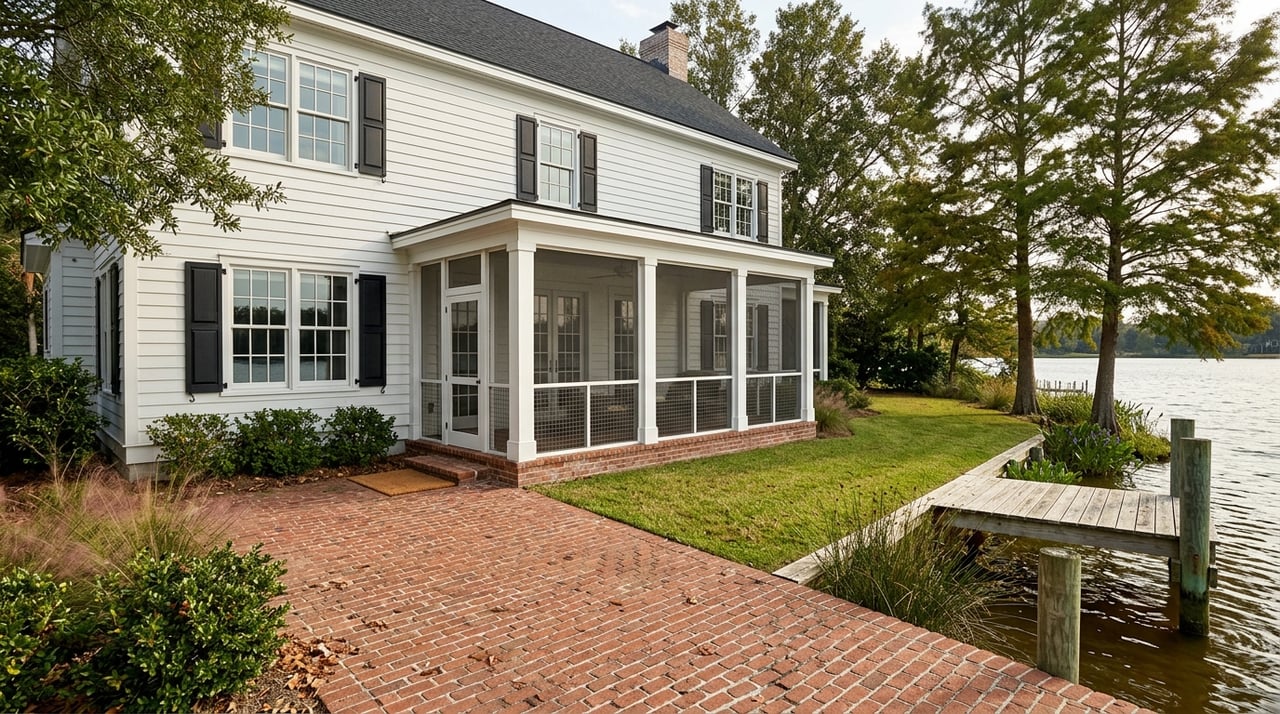
If a dock or pier is part of the appeal, do not treat it like an automatic feature that transfers with the house. Under North Carolina state lake regulations, no structure may be built in, on, or floating on the lake without a state lake permit.
Those permits are issued through the managing park office and must be renewed annually. A permit is also required for initial construction, major modification, and transfer of ownership interest in an existing structure.
In practical terms, that means your closing file should include dock paperwork. You should ask early:
- Is the dock or pier permitted?
- Is the permit current?
- Can the permit transfer to a new owner?
- Were any lifts or floating sections added later?
- Does a shared pier or HOA pier have separate rules or fees?
Private-pier rules are also specific on state lakes. The regulations limit size, cap a private pier at one boat slip, require permit numbers to be displayed, and generally require spacing from property corners and nearby structures.
Plan for Vegetation and Lake Maintenance
Owning near the water can also mean dealing with aquatic vegetation. The North Carolina Department of Environmental Quality notes active hydrilla management around docks at Lake Waccamaw.
For you, that is a reminder that lake access can come with ongoing maintenance concerns. If a property has a dock, slip, or launch area, ask how vegetation has affected access and whether any upkeep or coordination has been needed.
This does not mean the property is a poor fit. It simply means that lake living here works best when you go in with clear expectations.
Check Flood Risk by Address
Flood risk is another must-check item for waterfront buyers. The official public source for flood hazard information is FEMA’s Flood Map Service Center, and FEMA notes that most homeowners insurance does not cover flood damage.
That is why an address-level check matters more than a quick glance at a listing sheet. North Carolina also notes that flood-risk data is still being updated in parts of the state, so the most current map review is the safer approach.
Columbus County requires a floodplain development permit before development in Special Flood Hazard Areas. The county also requires elevation certification and final as-built certificates for new or substantially improved structures in those situations.
Before you close, ask for:
- The exact flood zone designation
- Any available elevation certificate
- Records for major improvements or additions
- A current flood insurance quote
Getting this information early helps you budget more accurately and avoid last-minute surprises.
Review Septic and Utility Details
Many buyers focus on views, lot size, and dock access first. Just as important, though, is whether the property’s septic and utility setup actually fits your plans.
According to Columbus County Environmental Health, septic permits cover new installations, existing systems, and repairs. Septic evaluations consider factors like topography, soil characteristics, soil wetness, soil depth, restrictive horizons, and available space.
That matters if you are buying an older waterfront home, replacing a structure, or thinking about future expansion. The county also notes in its septic program materials that an existing system may sometimes be reused if a replacement home has the same bedroom count, while a larger home can trigger septic expansion review.
Before closing, ask these questions:
- How many bedrooms is the septic system approved for?
- Does that match the current home?
- Are there records for repairs or replacements?
- If you plan to expand, will the site support it?
Columbus County also offers a permit inquiry process and charges a septic record locator fee. If records are unclear, that is worth doing during due diligence.
If the property uses a well, there is one more issue to check. The county says a well permit is required for new construction or replacement wells, and no well permit will be issued for new construction if county water is available to the property.
Understand Today’s Price Bands
Waterfront pricing at Lake Waccamaw spans a wide range. Current portal snapshots show active asking prices from the mid-$100,000s for some lots or water-access opportunities to core move-in-ready waterfront homes in roughly the mid-$500,000s to mid-$600,000s, with premium lakefront properties climbing higher and sometimes approaching or exceeding $1 million.
Current counts also show that inventory is limited and can shift quickly as listings refresh. Redfin currently shows 16 waterfront homes for sale in Lake Waccamaw, with a median listing price of $470,000 and a typical market time of 136 days.
A simple way to think about the market is this:
| Price Range | What You May See |
|---|---|
| Mid-$100Ks to low-$300Ks | Lots, water-access opportunities, or select entry-level options |
| Mid-$500Ks to mid-$600Ks | More typical move-in-ready waterfront homes |
| Above that | Premium lakefront or luxury properties |
These are practical brackets based on current asking prices, not closed-sale analysis. Still, they can help you set expectations before you start touring homes.
Ask These Questions Before You Offer
When you narrow down a property, focus on the details that affect ownership the most. On Lake Waccamaw, a short list of smart questions can save you time and money.
Ask the seller or listing side:
- Is the property direct lakefront, canal-front, or deeded-access only?
- Does the dock or pier have a valid permit?
- Will the permit transfer at closing?
- Are there shared-pier, HOA, or access fees?
- Is the lot in a flood zone?
- Is there an elevation certificate?
- What is the septic system approved for?
- Do existing improvements match septic approval?
- Does the property use county water or a well?
These questions are especially important on a lake with state-regulated structures, floodplain considerations, and site-specific utility issues.
Why Local Guidance Matters
A Lake Waccamaw waterfront purchase often involves more moving parts than a standard home sale. You may need to review permit records, confirm flood details, clarify access rights, and coordinate with local professionals before closing.
That is where steady, local guidance can make the process easier. A hands-on brokerage can help you organize the right questions, keep due diligence on track, and work with legal, tax, and mortgage contacts when the transaction gets more complex.
If you are considering a waterfront home at Lake Waccamaw, Tatum Realty LLC can help you sort through the details, compare properties carefully, and move forward with confidence.
FAQs
What should buyers verify about Lake Waccamaw waterfront access?
- Buyers should confirm whether a property is direct lakefront, canal-front, second-row, shared-access, or deeded-access only before making assumptions about value or water use.
What should buyers ask about docks and piers at Lake Waccamaw?
- Buyers should ask whether the dock or pier is properly permitted, whether the permit is current, and whether that permit can transfer with the sale.
What flood information should Lake Waccamaw buyers review?
- Buyers should check the property address through FEMA’s Flood Map Service Center, confirm the flood zone, ask for any elevation certificate, and get a flood insurance quote before closing.
What septic questions matter for Lake Waccamaw homes?
- Buyers should verify how many bedrooms the septic system is approved for, whether that matches the home, and whether any future expansion could require additional review.
What price range should buyers expect for Lake Waccamaw waterfront homes?
- Current asking prices suggest entry-level water-access opportunities may start in the mid-$100,000s, many move-in-ready waterfront homes fall in the mid-$500,000s to mid-$600,000s, and premium lakefront homes can reach or exceed $1 million.