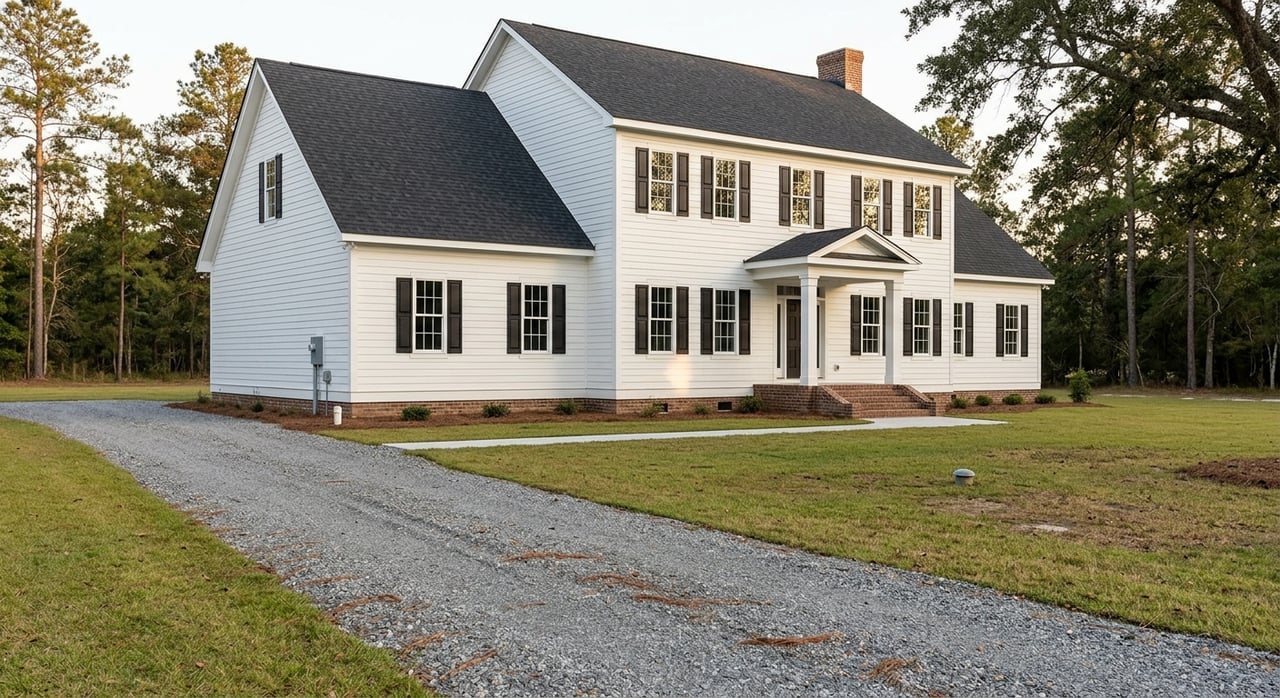
Dreaming about building a home on acreage in Council, NC? The land may look perfect at first glance, but rural homesites often come down to a few practical details that can make or break your plans. If you want to avoid surprises, it helps to understand what to verify before you buy, what permits come first, and which site conditions can affect your budget. Let’s dive in.
Start With the Land Itself
Before you think about house plans, start by confirming the basics of the parcel. In Bladen County, the Register of Deeds is the official source for deeds, mortgages, plats, and other public records, while the county GIS portal can help you review parcel PIN, parcel ID, address, and owner information.
This step matters because the county zoning permit application asks for practical details right away. You may need the tax parcel ID, 911 address, utility information, and floodplain status before moving forward. If the property uses private sewer, septic permit approval is also required as part of the process.
Check Zoning and Floodplain Status Early
Not every piece of acreage is automatically ready for a homesite. Bladen County Planning enforces county land-use ordinances, and county materials also direct buyers to check flood risk maps and other ordinance information before building.
If a parcel is in a floodplain, that can affect your plans in several ways. The county zoning permit application requires an elevation certificate for floodplain lots, and flood-zone status can also affect financing and insurance decisions. In North Carolina, official flood-map references include FEMA maps and the state FRIS map.
Treat Road Access as Its Own Step
Road access deserves its own review, especially on rural land around Council. If your project needs new or changed access to the state highway system, NCDOT requires a driveway permit.
It is also smart to verify whether the road is state-maintained. NCDOT’s Public Street Information Database is the official source for checking road ownership and maintenance status, which can help you plan for frontage, driveway placement, and site layout much earlier in the process.
Septic Is Often the Biggest Hurdle
On rural acreage in Bladen County, septic is often the gating issue. The county’s Environmental Health division requires an Improvement Permit and Construction Authorization before a septic system can be installed, and those approvals must be in place before you can get a building permit for a house or any structure with indoor plumbing.
That means a tract that looks buildable from the road still may not support the home you want. Bladen County specifically recommends evaluating the potential house site before purchase so you know whether the lot can support a septic system.
What the Site Plan Must Show
When you apply for septic review, the county requires a site plan with specific details. That plan should show the proposed structure size and location, property lines, wells, power lines, easements, and rights-of-way.
The county also notes that the lot may need to be partially cleared so staff can access it. In some cases, if gravity flow will not work, a sewage effluent pump may be required, which can add cost and complexity.
Why Build Costs Vary Between Tracts
Two parcels with similar acreage can have very different build costs. Bladen County’s site-evaluation materials list several possible septic paths, including conventional, modified conventional, alternative, and innovative systems.
In practical terms, that means soil and site conditions can push one property toward a straightforward setup and another toward a more involved system. This is one of the biggest reasons raw land buyers should not assume one tract will cost the same to build on as the next.
Plan for Water Service
Water is the other major utility question when you are building on acreage in Council. If the property will use a private well, North Carolina requires all newly constructed private wells to be tested within 30 days of completion before the well is established as a drinking water source.
Bladen County Environmental Health handles well permits and water sampling. The state also says private well owners are responsible for ongoing water testing and can work with the local health department or a state-certified commercial lab.
If You Need a Private Well
Private wells come with long-term responsibilities, not just upfront installation. North Carolina recommends checking the wellhead once a year and retesting after repairs or flooding.
If flooding damages a private well, it should not be used until it has been properly disinfected and tested. That makes flood-risk review even more important when you are comparing acreage options.
If Public Water Is Available
Some parcels may be able to connect to county water instead of using a private well. In that case, Bladen County Water District handles the application, meter location, physical inspection, and activation.
The county also says the service line must meet State Plumbing Code requirements. It cannot run through a septic drainfield and cannot be within 10 feet of a septic tank, so it is important to coordinate the house pad, septic area, water line route, and driveway before construction starts.
Understand the Permit Sequence
One of the easiest ways to avoid delays is to follow the right order. In Bladen County, the practical sequence is to verify deed records, GIS details, zoning, floodplain concerns, and road access first.
After that, move into septic and well evaluations. Then obtain the required permits, build the home, and complete inspections and utility hookups. County and state materials make it clear that septic, water, and access decisions need to happen before the building permit stage.
Budget for More Than the House
When you build on acreage, the lot cost is only part of the picture. Bladen County’s published fee schedule gives you a starting point for administrative costs, including a $25 zoning fee, a residential building permit minimum of $75, a $300 Improvement Permit, a $100 Construction Authorization, and a $300 well permit.
You should also expect separate plumbing, electrical, mechanical, and inspection fees. The county warns that work cannot begin until the permit is issued, and starting before approval may lead to double fees.
Site Costs That Can Change Quickly
Beyond permit fees, acreage projects often include site-specific costs that vary from one tract to another. These can include:
- Survey work
- Floodplain documentation
- Clearing or brush removal for septic evaluation
- Pumped or alternative septic designs
- Private well equipment and testing
- Water tap-in costs if public water is available
- Grading, culvert work, or contractor costs tied to driveway access
If access to a state road is needed, NCDOT requires a driveway permit, but there is no application fee for that permit itself. Even so, the related site work is still a real budget item.
Ask Smart Questions Before Closing
If you are buying acreage in Council with plans to build, a few records can help you make a much more informed decision. Ask for recorded plat or deed references from the Register of Deeds, plus any available septic permit and layout.
If there is already a private well on the property, ask for the well records and any maintenance history. These documents can help you understand what is already in place and what still needs to be confirmed.
Think About Rural Living Details Too
When buyers picture acreage, they often focus on privacy, space, and the home itself. It also helps to understand a few everyday service details that may work differently than in a neighborhood setting.
For household garbage and recycling, Bladen County Solid Waste operates 17 collection sites, including a Council site at 120 Carvers Creek Rd. That is useful to know if you are comparing a rural build with a home that has more typical curbside service.
Why Local Guidance Matters
Building a home on acreage in Council can be rewarding, but the process is rarely as simple as picking a floor plan and getting started. Septic review, water service, floodplain checks, road access, and county permits all play a major role in whether a parcel fits your goals.
That is where local experience makes a difference. A team that understands Bladen County land, acreage due diligence, and the moving parts of a rural transaction can help you ask better questions before you commit. If you are exploring land in Council or anywhere in Bladen County, connect with Tatum Realty LLC for steady, local guidance from search to closing.
FAQs
What should you check before buying acreage in Council, NC?
- You should verify deed records, parcel details, zoning, floodplain status, road access, and whether the property can support septic and water service.
Can any acreage tract in Bladen County become a homesite?
- No. A tract still needs to clear zoning, floodplain, access, and septic review, and the county recommends evaluating the homesite before purchase.
Do you need septic approval before building a home in Council, NC?
- Yes. Bladen County requires an Improvement Permit and Construction Authorization before a building permit can be issued for a house or any structure with indoor plumbing.
Does a weekend home on acreage need the same septic review?
- In most cases, yes. If the structure will have indoor plumbing, the county requires septic permits before the building permit stage.
What permit fees should you expect for a rural build in Bladen County?
- Published county fees include a $25 zoning fee, a residential building permit minimum of $75, a $300 Improvement Permit, a $100 Construction Authorization, and a $300 well permit, with other trade and inspection fees separate.
What happens if a private well or septic system floods in North Carolina?
- If flooding causes damage, the system should be inspected, and a private well should be disinfected and tested before use.